
What’s a logo made of? The ideal logo will serve as your brand’s visual representation. It will provide important information about the brand to your target market. It’s the ideal technique to start a conversation with your consumers and clients. Following the logo design process, makes a powerful impact on how consumers perceive your brand.
Since it’s frequently the first thing that attracts the eye, the logo will have a lot of weight. There are three possible reactions to a piece of design, according to Milton Glaser, “yes, nay, and WOW!”
You obviously want to WOW your brand representative.
The logo isn’t limited to merely the front of a physical store or the business cards distributed to promote services. Scalability and adaptability are crucial components of the design because your logo must work in all spheres of marketing, from large to tiny.
A crucial factor is a memorability. You frequently have just a few seconds to capture a customer’s attention. Even after only a brief exposure, you want your brand to remain in their minds.
As of now, you are aware that you desire a favorable response, adaptability, and memorability. What additional key components of your logo exist? And how can you make your company’s logo appealing and memorable?
In this blog, we will outline and discuss what is a logo, the different types of logos, and the logo design process.
What is a logo?
You probably picture a bitten apple or a famous swoosh when you think of it. After all, we all know what a logo is.
A logo is a symbol or pattern that uniquely represents a business or organization along with its services, employees, etc.
In its most basic form, a logo is identifying. It influences how customers see and remember your company. It is also the public face of your company.
Another way is to use your company’s logo to make a statement. Take Amazon as an example, the smiley arrow indicates that the shop offers everything from “A-Z” and represents how satisfied customers are with their purchases.
Types of logos
Despite the fact that each logo combines typography and visual components, it provides your company with a unique appearance. Additionally, pay attention to the details since prospective clients will first see your brand there.
Here are the different types of logotypes:
01. Wordmarks/logotypes:

Wordmarks also referred to as logotypes, are made up of the brand name in a particular typeface. Even though something appears to be very simple, Steve Jobs famously said that “Simple might be harder than complex.”
Wordmarks are a fantastic choice for organizations with unique names or those wishing to extend their name throughout the world because their logo will appear on all of their marketing materials.
Wix, Coca-Cola, Subway, Casper, Kellogg’s, eBay, and West Elm are a few examples.
02. Letterforms:

One-letter logos, or letterforms, only employ the first letter of the brand name. Brands frequently incorporate a second version of their logo that includes their whole company name to be utilized on numerous occasions (called a wordmark or logotype, as described above).
Generally speaking, businesses with a solid reputation should choose letter-based logos. If not, it could be challenging to get people to recognize and recall the name of your business. Long-named brands can also profit from them.
Examples include Uber, Beats, Netflix, McDonald’s, Facebook, and Pinterest.
03. Lettermarks/monogram logos:

Letter marks are typographic logos made up of the brand’s initials, often known as monogram logos. When speaking, brands with monogram logos, such as IBM and NASA (when was the last time you heard someone say National Aeronautics and Space Administration? ), are typically referred to by their abbreviated version.
In several sectors, brands frequently utilize their name’s abbreviation. You can continue the habit and make a logo out of letter characters if you operate within such a framework. When a company has a long name and wants to make a shorter version more recognizable, letter signs are a popular solution.
HBO, IBM, NASA, CNN, HP, and Louis Vuitton are a few examples.
04. Logo symbols/brand marks/pictorial marks:

Logos are visual symbols, signs, or images that symbolize a company’s identity or line of business. They are also known as trademarks or figurative marks. These kinds of logos frequently feature a real object. The finest logos use symbols so that consumers can recognize the business right away.
These logos have the benefit of being powerfully declarative. A great logo can become incredibly recognizable as your company’s reputation grows.
Instagram, Snapchat, Shell, Target, Apple, and Major League Baseball are a few examples.
05. Abstract logo marks:

These are image-based logos that use abstract forms to convey a company’s branding. Compared to visual marks that feature actual objects, abstract logo marks are more symbolic.
Make sure your brand identity is well-established and that you are clear on the message you want to convey to your target market before designing this type of logo. An abstract logo mark might also be a good choice for international businesses whose names don’t transfer well into different languages.
Examples include Airbnb, Chanel, Nike, Pepsi, Google Drive, and the Olympics.
06. Mascots:

Mascot logos sometimes include animated characters that represent brands or serve as their public faces. As long as they correctly represent the brand, they can be real people or fantasy characters.
Mascots can be useful when developing social media and marketing campaigns because they are typically amiable and interesting. But keep in mind that they frequently contain more information than a typical logo, thus they might need to be simplified for small dimensions, like favicons or business cards.
Examples include Mr. Peanut by Planters, Colonel Sanders by KFC, Cap’n Crunch, and Tony the Tiger by Kellogg’s.
07. Emblems:

Emblems, also known as badge logos, frequently have elements that are suggestive of coats of arms. Words and symbolic imagery combine to form complex patterns with a classical allure.
Emblems also provide you the freedom to express anything that captures the essence of your company. Remember while creating an emblem that this kind of logo is less versatile because of its subtle components and doesn’t always perform well on a smaller format. You can find a simpler solution in these situations.
Examples include Starbucks, Harley-Davidson, Stella Artois, the NFL, Warner Brothers, and Manchester United.
08. Combination marks:

This type of logo mixes text and (surprise, surprise) imagery. For example, a combination logo can combine a symbol with a wordmark, a mascot with a letterform, and so on. Some companies use a combination mark as their main logo, occasionally separating text and image to better suit different circumstances.
Combination marks are a good starting point for businesses that still need to build their brand reputation. Over time, you can use either just the text or just the icon and still be recognized. Using icons, symbols, and other visual elements to complement the text helps potential buyers understand your brand.
Taco Bell, Toblerone, Dropbox, CVS, NBC, and Dove are a few examples.
Importance of a logo in branding and identity

A company’s branding and identity depend heavily on its logo. It is a visible representation of the business, condensing its principles, goals, and products into a single, recognizable sign. A corporation can build trust and leave a positive impression on its target market with a well-designed logo.
Challenges of designing a logo
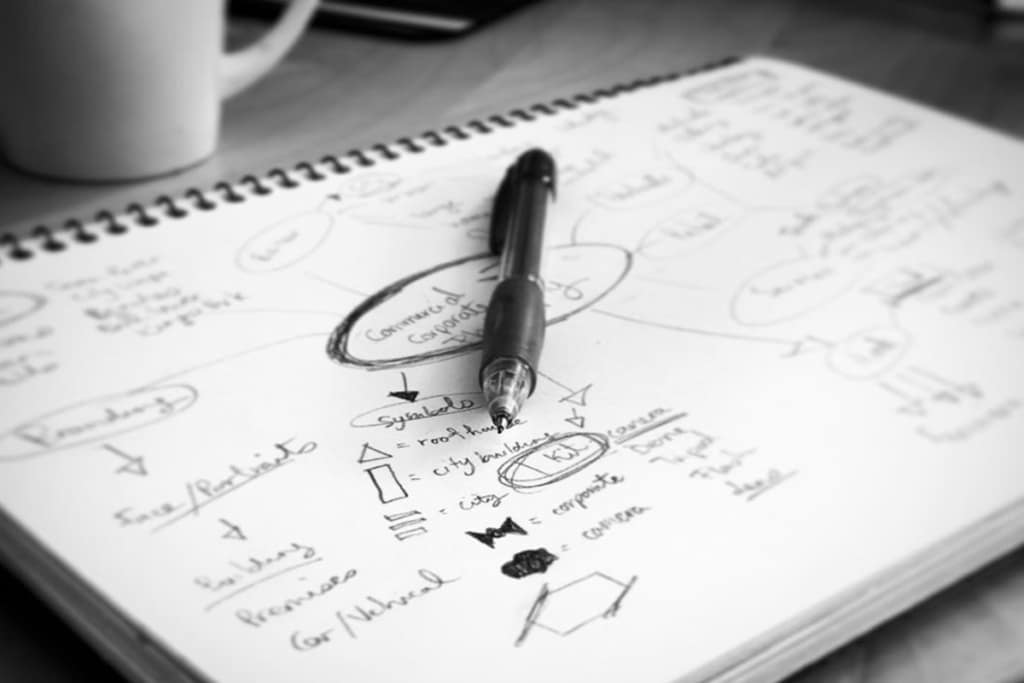
It might be difficult to create a logo that truly represents a business and appeals to its target market. It demands both a creative design eye and a thorough understanding of the business and its objectives. The logo must be pleasing to the eye, instantly recognizable, and scalable for use across a range of media.
Overview of the logo design process
It’s crucial to adhere to a methodical process in order to produce a great logo. This process entails studying and researching the business, coming up with ideas and concepts, honing the designs, showing the client the finished product, and putting the design into practice across all company documents. We will go into great detail about each step of the logo creation process in this article.
Logo design process:
Stage 1: Research and analysis

No business is situated in a vacuum. Even though a business makes every effort to separate from the competition, it must nevertheless adhere to industry norms.
Examining the logos of rival businesses and industry pioneers is one of the most crucial aspects of the logo creation process. You can distinguish between a logo that is too unconventional and one that is generic during this stage, which is referred to as the industry discovery phase.
A. Understanding the company, target audience, and market
Researching and comprehending the business, its target market, and the industry it operates is the first stage in the logo design process. This knowledge is essential for determining the design’s course and ensuring that the final product appropriately represents the brand and connects with its intended audience.
When conducting this research, it is crucial to take into account elements like the company’s values, mission, offers, and target audience.
B. Using research to guide design direction
It is critical to use the data acquired to inform the design direction once the research is complete. This necessitates taking into account the visual components that will effectively communicate the company’s beliefs and mission to the target market.
The study can also assist in decisions on typography and color schemes, assisting in the development of a unified and consistent brand identity. It is crucial to take the time to gather and analyze pertinent data because the research stage lays the groundwork for the other stages of the logo design process.
Stage 2: Conceptualization

Be mindful of the objectives of your business when designing your logo. Elements of your logo will change depending on your company’s objectives and functions. Ideas that don’t quite suit the corporate culture can be generated relatively easily.
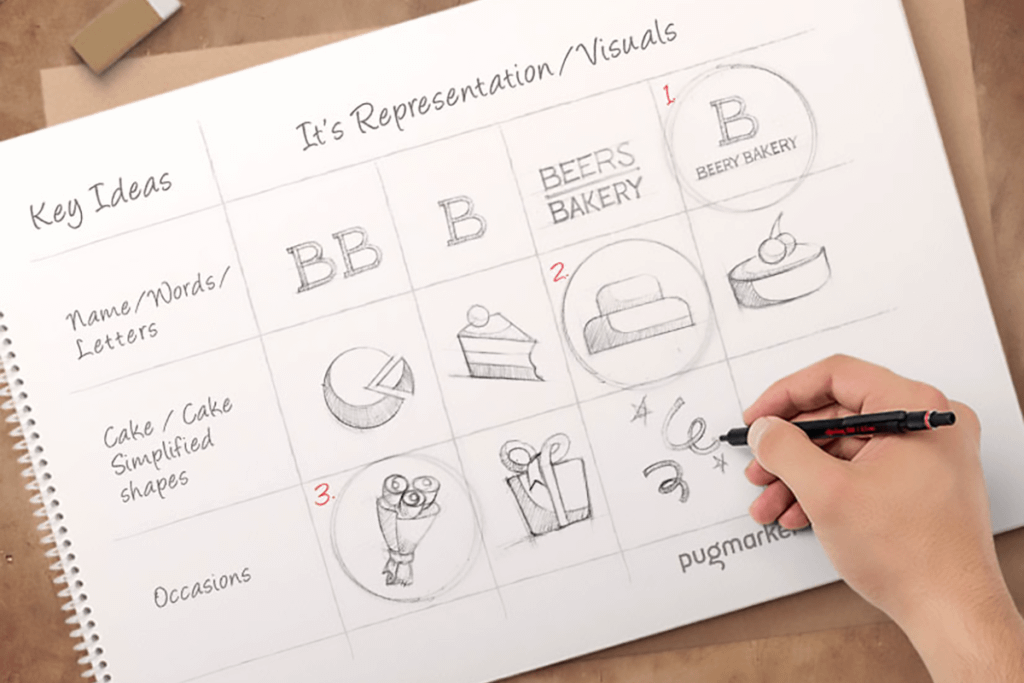
A. Brainstorming and sketching ideas
The design concept step should begin once the research and analysis phase is finished. Brainstorming meetings and rough sketches of ideas are frequently the first steps in the logo design process.
The objective at this point is to come up with as many ideas as you can, no matter how clumsy or unusual they may be. The goal is to investigate multiple design trajectories and find promising ideas.
B. Exploring various design directions
Once a sizable number of concepts have been produced, it is time to look at the many design directions that have been suggested. The most promising concepts are developed during this stage from the best brainstorming ideas.
When perfecting the designs at this point, it’s crucial to take into account elements like scalability, legibility, and aesthetics.
C. Generating a few solid concepts
The following phase is to develop some sound ideas that can later be polished and given to the client. These ideas ought to be true representations of the organization, its values, and its target market, taking into account the research and analysis already done.
The objective is to offer the client a variety of solutions, each with a distinct personality and aesthetic. It is crucial to select ideas that are visually appealing, instantly recognizable, and appropriate for use across various mediums.
Stage 3: Refinement
Making a logo for a client is one of the most satisfying yet challenging projects a designer can take on.
If you make a mistake, your client’s reputation suffers as much as your own. The present uproar around the debut of Gap’s new logo serves as the ideal illustration of the possible response.
It’s imperative that you retain your originality without complicating your ideas excessively. You can accomplish this by taking time to analyze your alternatives before sitting down at the computer.
The technique in the next video will show you how to get professional results from your client interactions without sacrificing your creative license.
A. Making tweaks and adding details
Once a few solid concepts have been created, it’s time to refine them further. At this stage, the designer fine-tunes and adds details to the designs to ensure they are aesthetically and visually pleasing. At this stage, care is also taken to ensure that the design is readable, scalable, and can be used in a variety of media and sizes.
B. Ensuring design is aesthetically pleasing, legible, and scalable
The stage of refinement is essential to producing an effective logo. The design must be scalable, aesthetically beautiful, and legible, according to the designer. The success of a logo is greatly influenced by its aesthetics because the design must be eye-catching and have a favorable effect on the intended audience.
Legibility is also crucial because the logo needs to be readable even in smaller sizes. Scalability is essential since the logo must retain its power and clarity when applied on different surfaces, such as business cards and billboards.
Stage 4: Presentation
You’ve come to the right place if you’ve ever wondered how to present logos to clients.
When what you give symbolizes your brand, the packaging is the best approach to presenting.
Everyone is aware that we use our eyes to make purchasing judgments. Your brand’s packaging and presentation should therefore be very enticing.
Your logos’ aesthetic appeal is equally as crucial as their real design.
A. Presenting refined designs to the client
It’s time to offer the client the designs after they have been polished. The improved concepts, the thought process behind each design, and a discussion of their potential effects on the target audience is all part of the presentation stage.
The designer and client must collaborate during this step in order to fully comprehend the client’s requirements and preferences.
B. Collaboration and communication with the client
During the presentation stage, cooperation and communication are essential. The client’s requirements, preferences, and desired outcomes for the logo must be thoroughly understood by the designer. At this stage, the client’s input is sought, and adjustments to the designs are made in response.
In order to ensure that the final product appropriately represents the organization, its values, and its target audience, clear and open communication is essential.
The designer may make sure that the finished product appropriately represents the firm and caters to the needs of its target market by working closely with the customer and taking into account their comments.
Making last design adjustments during the presentation stage will ensure that the final result is as good as it can be.
Stage 5: Finalization

Handing over finished files to the client, designers, and anyone else involved in developing the brand. The creation of branding materials such as stationery, business cards, brand guidelines, etc. begins when we are in the branding process.
A. Selecting and refining the final design
It’s time to complete the design after the client has seen the initial sketches. In order to make the chosen design scalable, aesthetically beautiful, and readable, it is finally picked and updated.
The finished product must appropriately reflect the organization, its beliefs, and its intended audience while also being visually appealing.
B. Digitizing the logo and creating necessary files
It’s time to scan the logo and produce the required files now that the final design has been decided upon. This procedure turns the hand-drawn design into a digital file that may be used on various media. Vector and raster files that can be used for printing, digital apps, and the web are among the many file formats that the designer must produce.
It’s also crucial that the logo is scalable and can be used in different sizes – from small to large. The finished product must be adaptable and functional enough to be used in a variety of contexts, including business cards, websites, billboards, and more.
The final stage of logo design is completion, and it’s critical that the finished product is of the highest caliber and appropriately represents the company and its target market.
Stage 6: Implementation

Delivery of the brand identity package, which includes a style guide and logo design, is required after your client has given their approval.
A. Using the logo across all company materials
It’s time to put the logo into practice when it has been finalized. At this stage, the logo must be used on all firm stationery, including letterheads, websites, and business cards. The logo truly comes to life during the implementation phase when it is employed to represent the business and its brand.
B. Ensuring consistent and recognizable branding
Consistency and acceptance during the implementation phase are essential. The logo needs to be used consistently across all media in order for the brand to be recognizable. Standards for the use of the logo, including color schemes, fonts, and positioning, must be created during this phase.
Following these guidelines helps to maintain the brand’s consistency and recognition, which raises its influence and impact on the target market.
Making sure the brand is recognizable and consistent depends on the implementation phase of the logo design process. By incorporating the logo throughout all of its marketing materials, the business may forge a distinctive brand identity and leave a lasting impact on its target audience.
Conclusion
A. Recap of the logo design process
A methodical technique to develop a visual representation of a business or brand is the logo design process. It entails study and investigation, as well as conception, improvement, presentation, completion, and execution.
Every stage is crucial to ensuring that the finished product is visually appealing, instantly recognizable, and appropriately represents the firm, its values, and its target market.
B. Importance of following a systematic approach
To create a strong corporate identity, logo design must be approached scientifically. The designer can ensure that the finished product adequately represents the company, its values, and its target market by going through each stage of the process.
A well-designed logo is essential to establishing a strong brand identity and impacting a company’s target market.
C. Final thoughts on creating a strong brand identity through a well-designed logo
In conclusion, a strong brand identity and a long-lasting impression on the target audience may both be achieved with a well-designed logo. Following this process is crucial in ensuring that the end product is of the highest quality and appropriately represents the firm and its target audience.
The logo design process is a methodical technique to generate a visual representation of a company or brand. Any company’s success depends on having a strong brand identity, and a quality logo is an important part of that identity.